Long Island School Carnival & Fun Day Ideas | EZ Peasy
Plan a school carnival around the way children will move through it. An open family fair needs visible signs and queue support; class rotations need realistic session times and transitions. Choose the attendance format and school approval lead before reserving attractions.
Check station capacity with a simple example
Suppose a group has twenty-four students and a station comfortably serves eight at once. The plan needs three turns plus time for instructions, resets and movement; it does not fit automatically into a short rotation. Use the supplier’s actual figures, then test the busiest station on paper. If it creates a long wait, duplicate it, split the group with a parallel activity or replace it before building the whole timetable around it.
Choose whether this is a school-day program, an after-school family fair or a fundraising event. Those formats need different supervision, attendance and payment arrangements. Confirm who has authority to approve outside vendors, facilities, food and event communications before the committee starts making promises.
Three carnival concepts with a clear personality
The curiosity carnival
Mix a science demonstration, a build-it craft station and a playful guessing game. Give children a simple activity passport that they can complete at their own pace. The reward can be a shared display of their creations rather than a contest. This format works especially well when the committee wants variety beyond large rental equipment and needs indoor alternatives.
The classic school fair, thoughtfully simplified
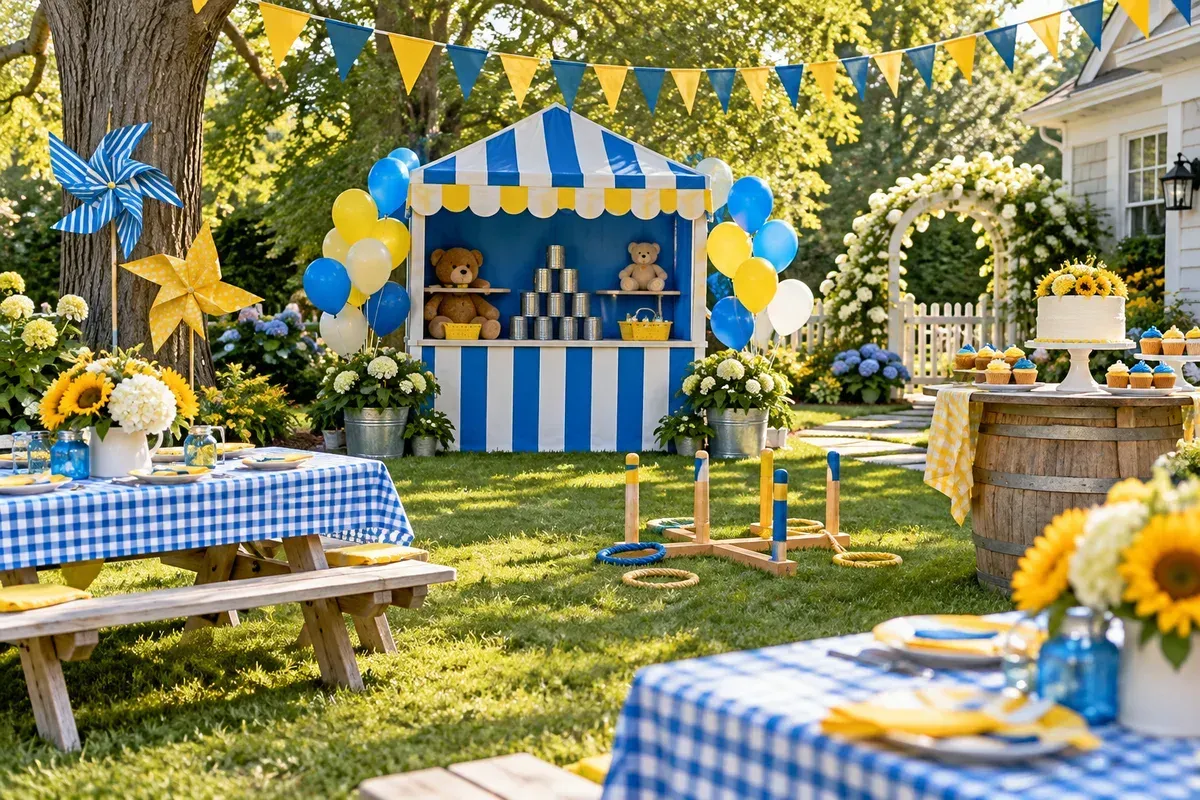
Choose a few recognizable games, a music corner and a colorful photo backdrop. Repeat a popular game in two places if it develops a bottleneck. Give prizes or participation tokens through a consistent school-approved system, with age-appropriate items. Keep food collection away from the busiest activity entrance so the same families do not block two queues at once.
The arts-and-play festival
Pair student performances with drop-in art and low-pressure games. Publish short performance windows so families can support a class without missing the whole fair. A quieter drawing station gives children a break from amplified sound. Assign one stage contact to coordinate the microphone, music and transitions; classroom volunteers should not have to improvise technical production.
Open fair or scheduled rotations?
An open fair gives families freedom but needs visible signs and active queue management. Class rotations create predictable group sizes but require travel time and a plan for absences or late arrivals. A hybrid can use scheduled access to one high-demand attraction while keeping crafts and simple games open. Avoid designing a schedule around a vendor's theoretical maximum capacity; ask how many students can participate comfortably in each session.
For outdoor plans, identify which parts can move indoors and which must be removed from the rain version. A gym is not automatically an approved home for every attraction. Ask the facilities lead about dimensions, floor protection, access, sound, electricity and available rooms. Confirm school and site requirements directly. Where public-event permissions may apply, the Town of Hempstead special event page illustrates why a committee should check the relevant authority rather than assume school approval covers everything.
Give volunteers real jobs
Create separate roles for welcome, queue support, station assistance, floating relief, food distribution and teardown. Put each person's time window and supervisor on one sheet. An equipment operator and a school volunteer may have different responsibilities; clarify that distinction with the supplier. The school should approve its own student supervision, reunification and emergency arrangements. Include an accessible participation option at each activity rather than treating it as a last-minute addition.
A planning sequence that prevents surprises
First, agree on the event purpose, attendance format and approval owner. Then walk the site and shortlist activities that fit. Compare written quotes using the same hours, audience and service scope. Before sharing the final family notice, confirm the weather version, food arrangements and arrival procedure. In the final volunteer briefing, rehearse one sample rotation and identify where children ask for help. Afterward, note queue problems and volunteer gaps for next year's committee.
Send vendors this brief
“Our [school/organization] is considering a [school-day rotation/family carnival] in [town] for [number and ages]. We have [site and access details], [event hours] and [weather alternative]. Please describe actual session capacity, staffing, setup and removal, power, documentation requested by our school, accessibility options and cancellation terms. Separate optional attractions from essential operating costs.” Ask who will be on site and who handles an equipment issue.
School carnival questions
How many attractions do we need?
Start with attendance, session length and capacity. A few well-run stations with short waits can serve families better than a long list of understaffed activities.
Can classroom volunteers operate everything?
Not automatically. Have the school and supplier agree on each activity's operator, supervision and training requirements before assigning volunteers.
How can we include children who dislike crowds?
Offer a quieter activity area, clear schedules and a low-pressure way to participate. Ask the school community what accommodations will help instead of assuming one solution suits everyone.
Which party services will help most?
Choose the help that will make the biggest difference to your plan:
games and inflatables: check the usable footprint, age suitability and operator responsibilities.
children’s entertainment: compare age ranges, audience participation and who supervises each activity.
food service: compare meal formats, serving staff, equipment and cleanup.
event staff and production: clarify staffing, equipment operation and who owns each event task.
Planning nearby? Read East Meadow party guide for another planning example, and confirm the arrangements for your actual venue or address.
Take your next step with EZ Peasy
Explore EZ Peasy’s party professional categories with your date, town, guest count and the brief above in hand. Customer booking is coming soon.
Still choosing an occasion? Browse the party planning library or try the occasion checklist.
