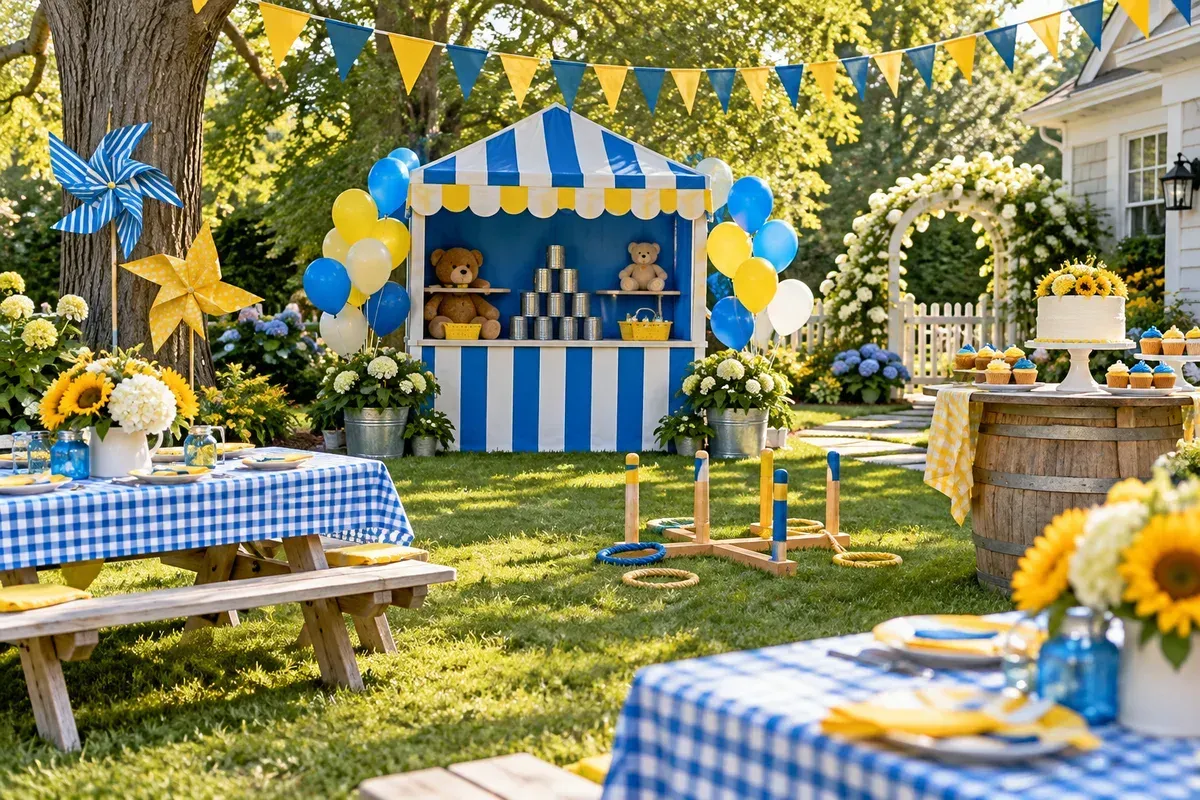
Long Island Camp Field Day & Party Ideas | EZ Peasy
A camp field day works when every age group gets time to participate, recover and move between stations. Mix a cooperative challenge, an active game and a creative option. Start with the camp director’s schedule and staffing plan so outside entertainment fits the day already in place.
Build the rotation using the slowest station
Ask each provider for participation time, instructions, reset time and comfortable group size. Put those figures beside walking and bathroom breaks before deciding how many groups can rotate. A team can work on a flag or puzzle while another group uses an activity, but that parallel station still needs an assigned leader. Keep the youngest campers’ route short and choose a real indoor program for the rain version.
Begin with the camp director's schedule and operating rules. Map the available spaces, existing staff assignments and arrival or dismissal windows before adding outside entertainment. A party supplier can provide a program or equipment; the camp still needs a clear plan for its own campers, supervision and communication.
Three ways to build the day
The expedition challenge
Groups travel through imaginative “expedition stations”: solve a picture puzzle, build a team flag, complete a cooperative relay and create a short team cheer. Give points for encouragement and teamwork as well as completing a task. This allows children with different strengths to contribute. Use a camp map as the activity passport and finish with a shared celebration instead of a long elimination round.
The splash-and-create celebration
Pair an approved water or foam activity with a dry craft zone, shaded games and a calm refreshment break. Keep wet and dry movement routes distinct. The operator and camp should agree on surfaces, age limits, clothing, participant instructions and weather conditions before the event. A dry alternative must be a real program, not a promise that everyone will wait under a canopy.
The camp talent playground
Rotate groups through rhythm games, a hosted movement session, collaborative art and short performances. Campers can participate on stage, behind the scenes or through their artwork. Use small group showcases rather than requiring every child to perform alone. This concept can translate into an indoor version more easily than a day built entirely around large outdoor equipment.
Design rotations around people, not just stations
Separate the youngest campers from activities intended for older children. Give each group a named lead and a visible meeting point. Build transition time into the schedule for walking, bathrooms and questions. If a station can comfortably serve fewer children than a full group, split the group deliberately and provide a useful parallel activity instead of making half the children wait.
A whole-camp finale creates excitement but may overwhelm the smallest campers. A series of shorter age-group finales can preserve that special moment with less noise and waiting. Ask vendors how they adapt their instructions for different ages and whether their quoted operating time includes resets between groups. One hour of equipment availability is not necessarily one hour of participation for every camper.
Make the weather version equally intentional
List the outdoor activities that depend on particular site and weather conditions. Ask the provider who makes the stop decision and what the contract says about rescheduling. The camp should identify appropriate shelter and its own emergency procedures. For ordinary rain changes, prepare a separate indoor rotation with approved room capacity, movement space and materials already allocated. Keep the tone positive: “Today is our studio challenge day” is more useful than repeatedly telling campers what was canceled.
A field-day planning checklist
Start by confirming the age groups, site, camp leadership contact and learning or celebration goal. Next, choose three or four complementary station types and test the rotation on paper. Gather supplier information and route it through the camp's approval process. Brief staff on arrival, transitions, participation alternatives and communication signals. On the day, walk all routes before campers arrive, then close with a short staff debrief while details are fresh.
Budget for the whole experience: activity staffing, delivery, setup, materials, shade or approved indoor space and cleanup. A lower equipment price can become a poor comparison if another proposal includes the people and supplies needed to operate the same program. Compare scope before comparing the final number.
Copy a camp vendor inquiry
“We are planning a field day in [Long Island town] for [groups, ages and numbers]. Each group has [rotation length] and our program runs [hours]. Our site offers [space, surfaces and access], with [approved rain plan]. Please suggest activities, actual group capacity, staffing, transition needs, operating conditions, setup timing and an itemized quote. Tell us what our camp staff must provide.”
Camp field-day questions
Does every station need to be competitive?
No. Cooperative building, creative challenges and skill practice give campers different ways to succeed. Keep participation alternatives part of the original design.
Should we add more stations for a larger camp?
Sometimes, but first check bottlenecks and group sizes. A duplicate popular station or staggered schedule may work better than introducing another complicated activity.
What makes a strong finale?
A shared cheer, collaborative artwork reveal or short recognition moment can be memorable without requiring a single winning team or a lengthy ceremony.
Which party services will help most?
Choose the help that will make the biggest difference to your plan:
play equipment: check the usable footprint, age suitability and operator responsibilities.
activity hosts: compare age ranges, audience participation and who supervises each activity.
refreshment formats: plan drink service, equipment and the people needed to run it.
event production: clarify staffing, equipment operation and who owns each event task.
Planning nearby? Read Woodbury party guide for another planning example, and confirm the arrangements for your actual venue or address.
Take your next step with EZ Peasy
Explore EZ Peasy’s party professional categories with your date, town, guest count and the brief above in hand. Customer booking is coming soon.
Still choosing an occasion? Browse the party planning library or try the occasion checklist.
